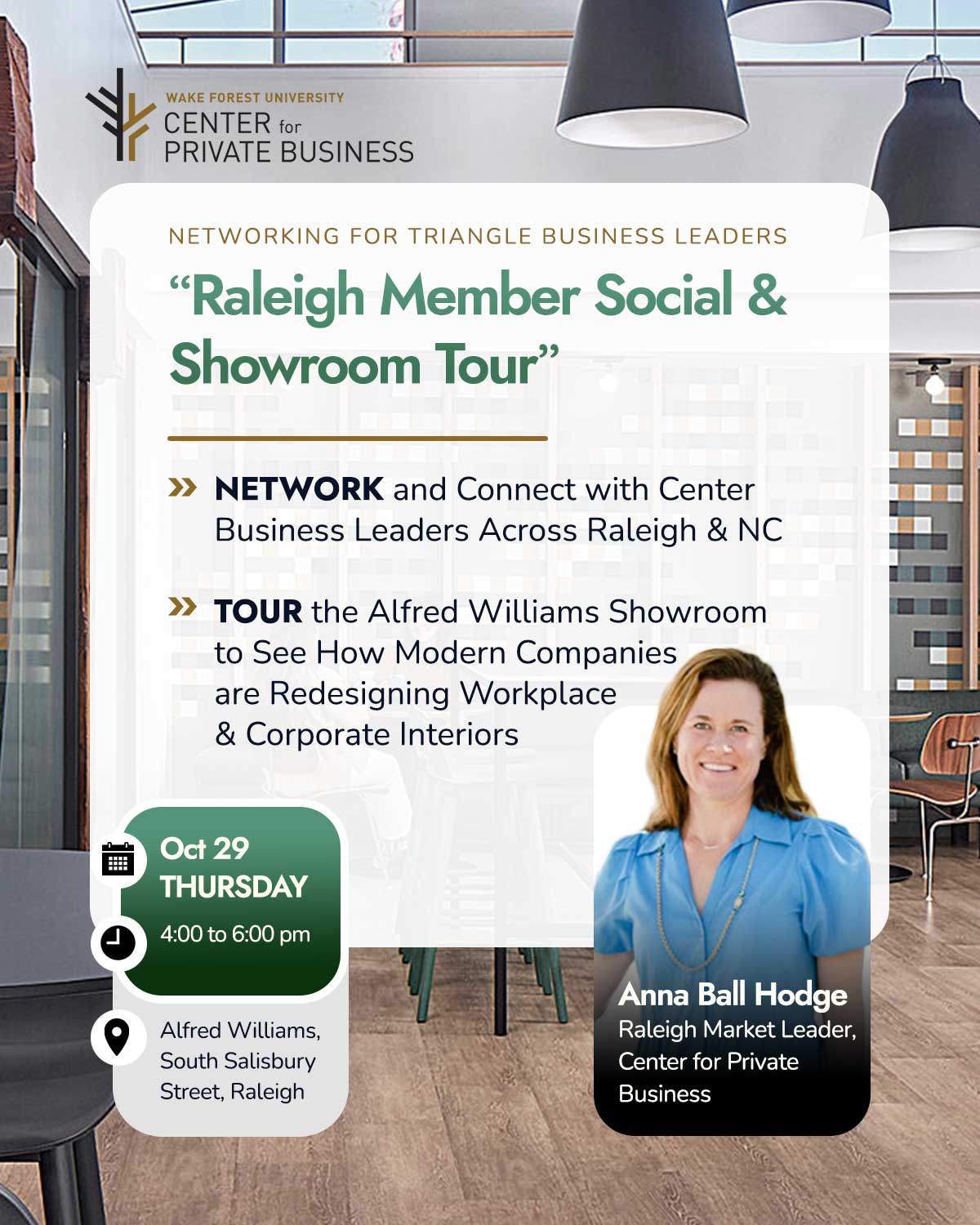
October 29 – Networking “Raleigh Member Social & Showroom Tour” with Alfred Williams
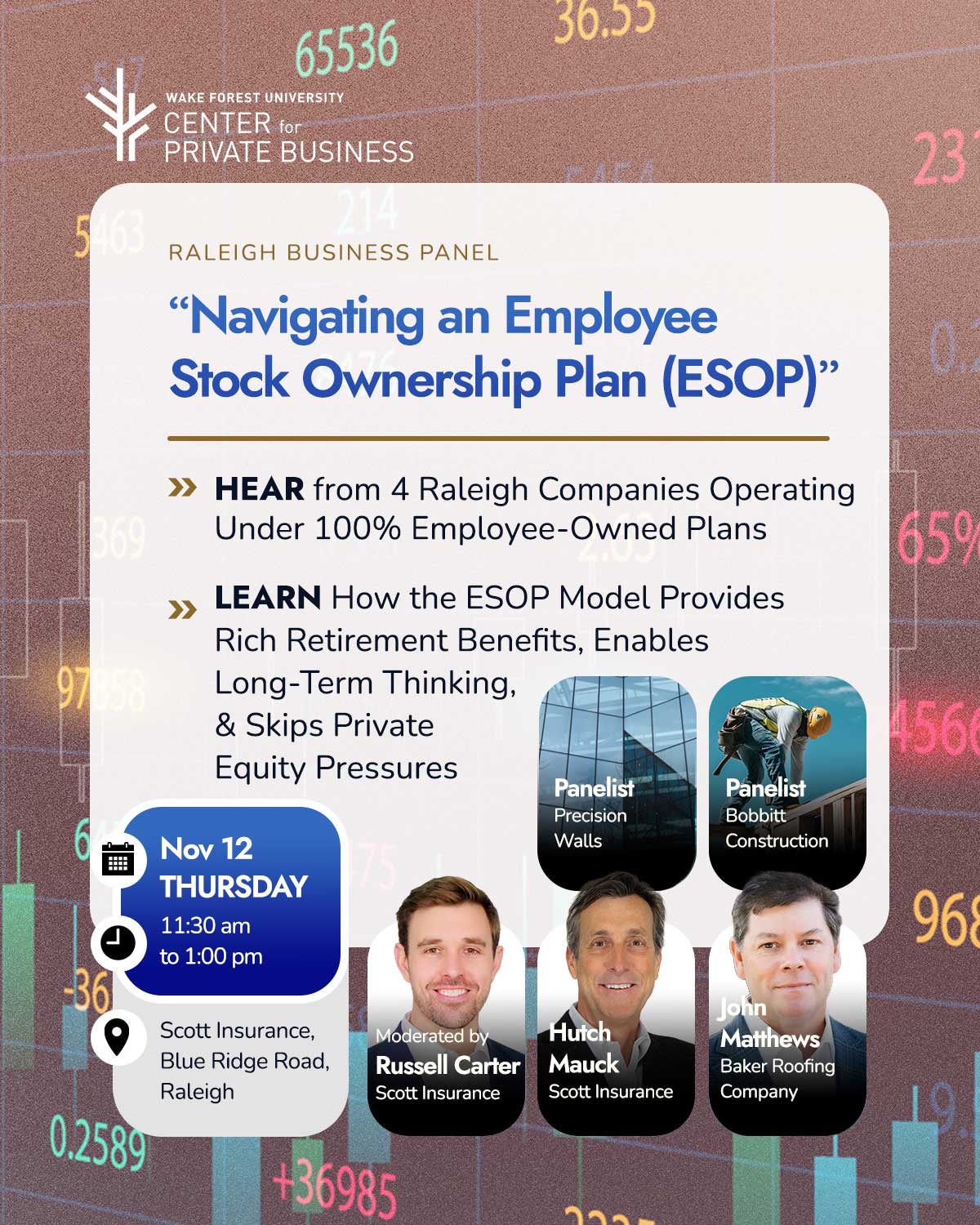
November 12 – Panel “Navigating an Employee Stock Ownership Plan (ESOP)” with Scott Insurance
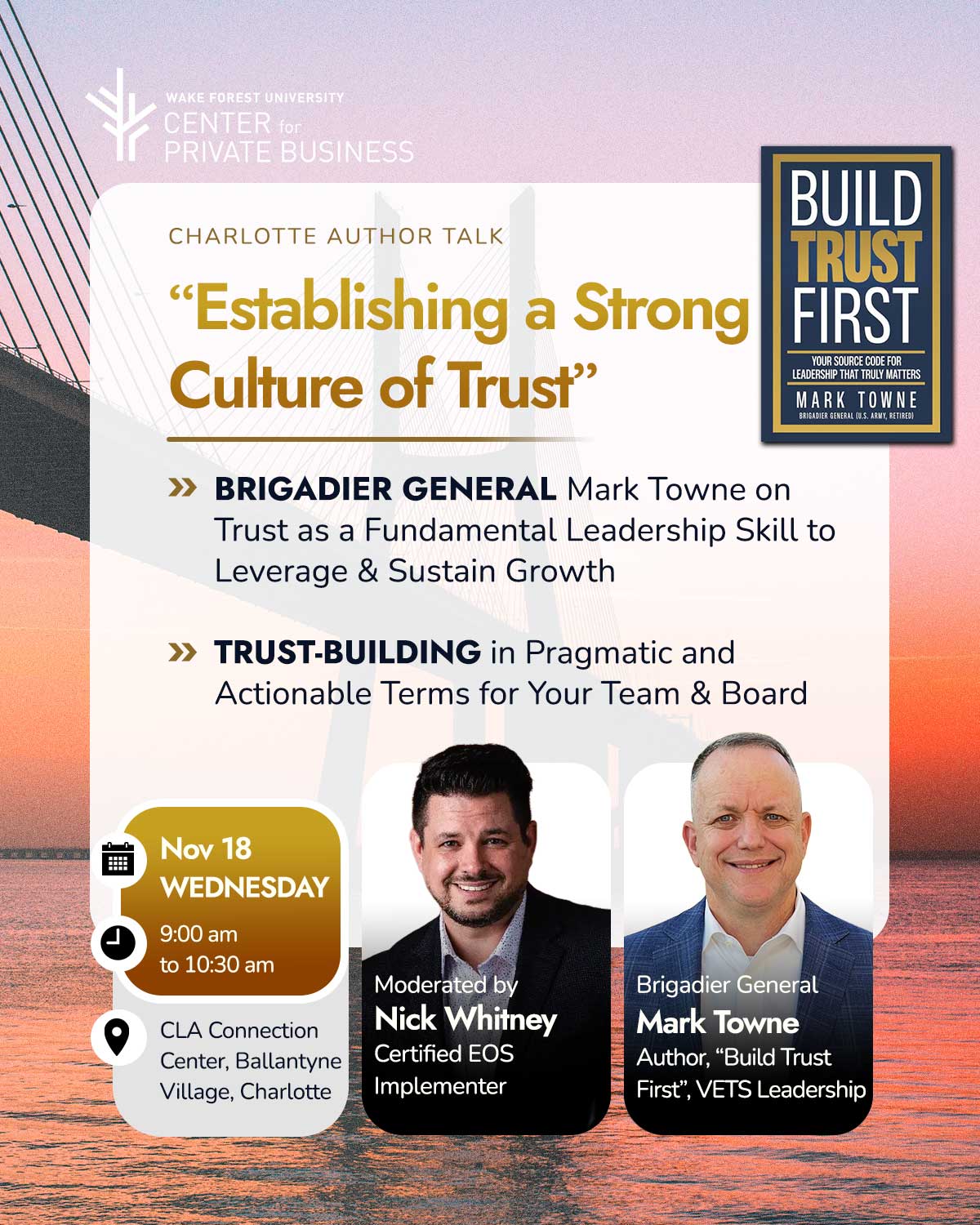
November 18 – Author Talk “Establishing a Strong Culture of Trust” with Brigadier General Mark Towne
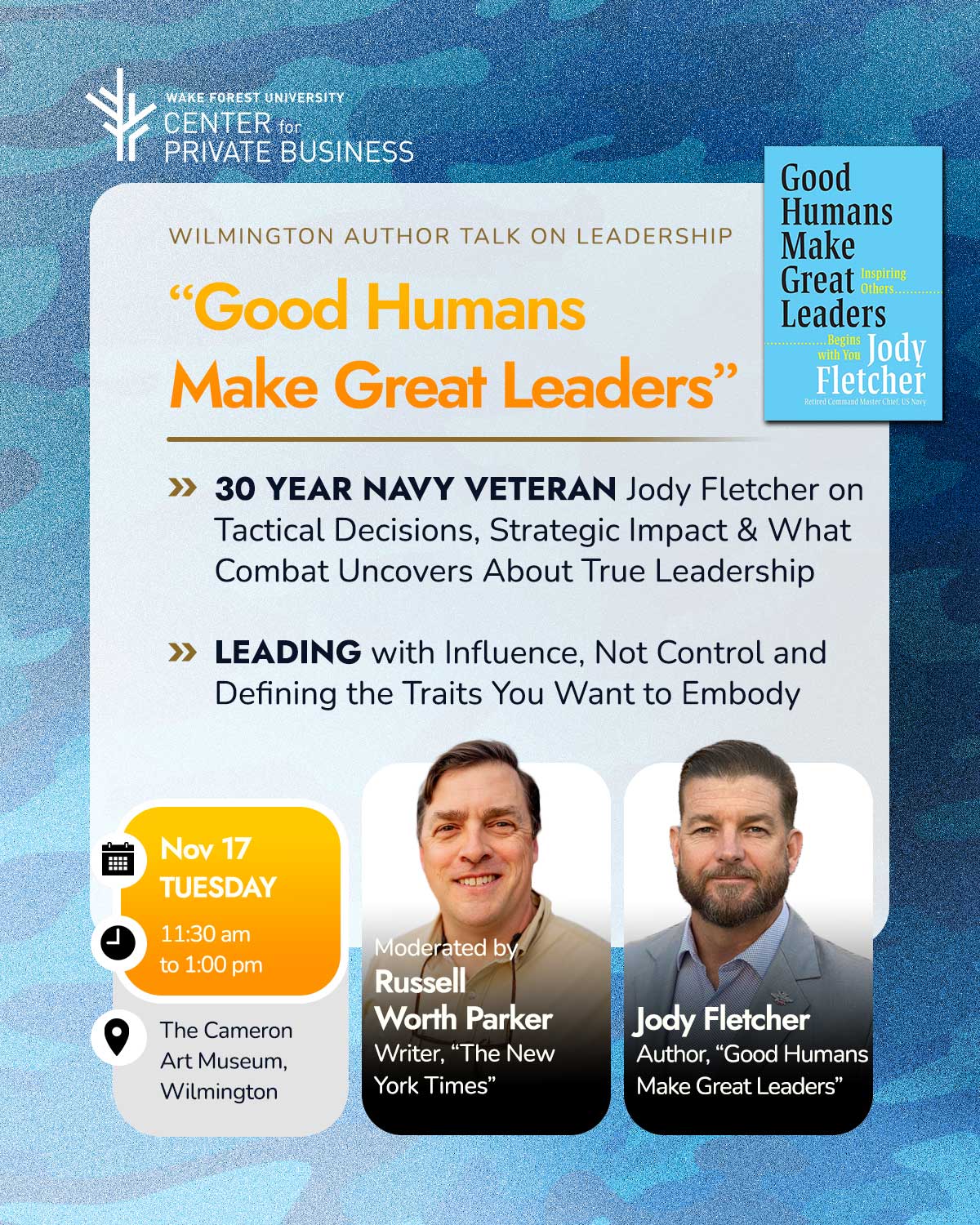
November 17 – Author Talk “Good Humans Make Great Leaders” with Jody Fletcher
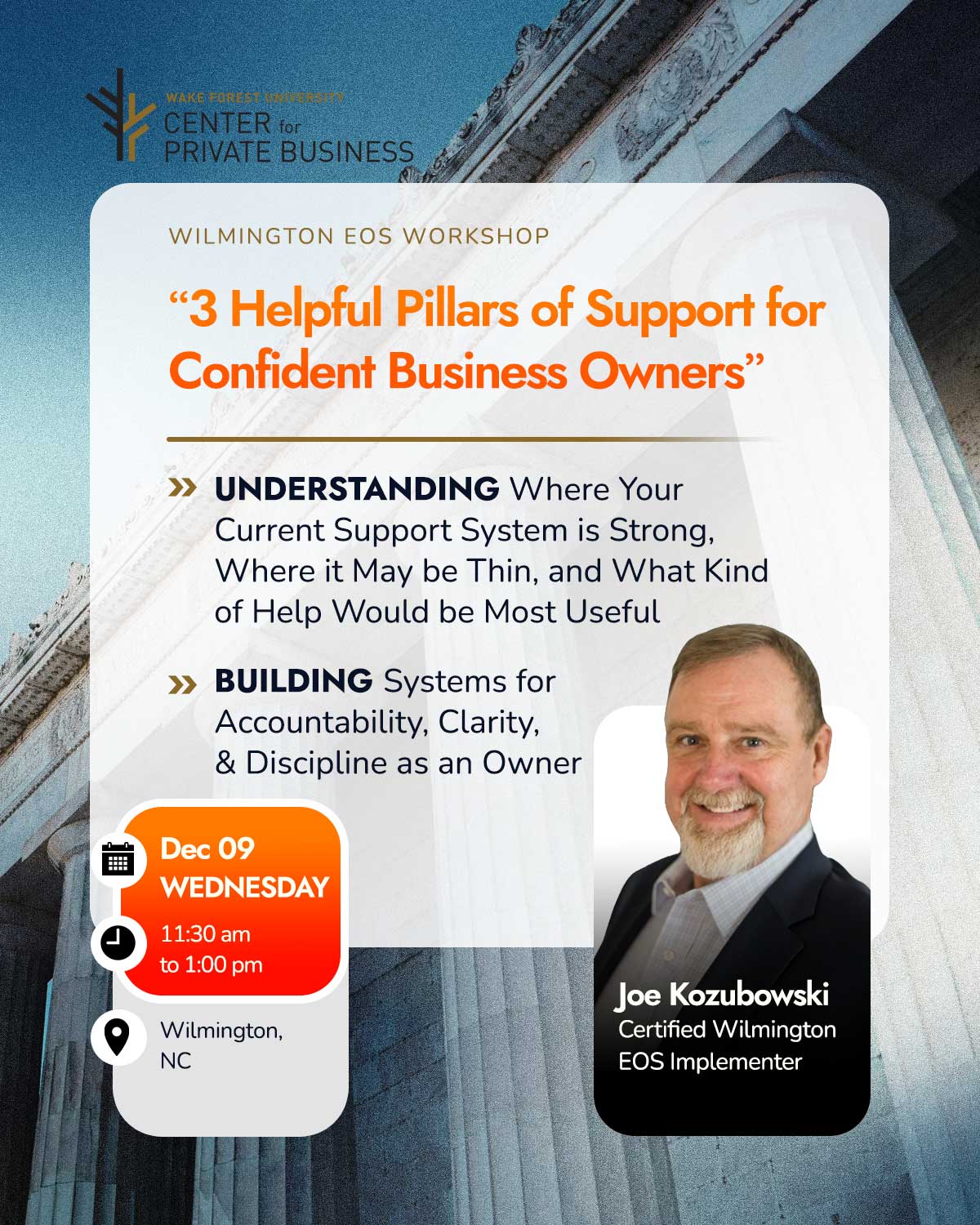
December 9 – Workshop “3 Helpful Pillars of Support for Confident Business Owners” with EOS
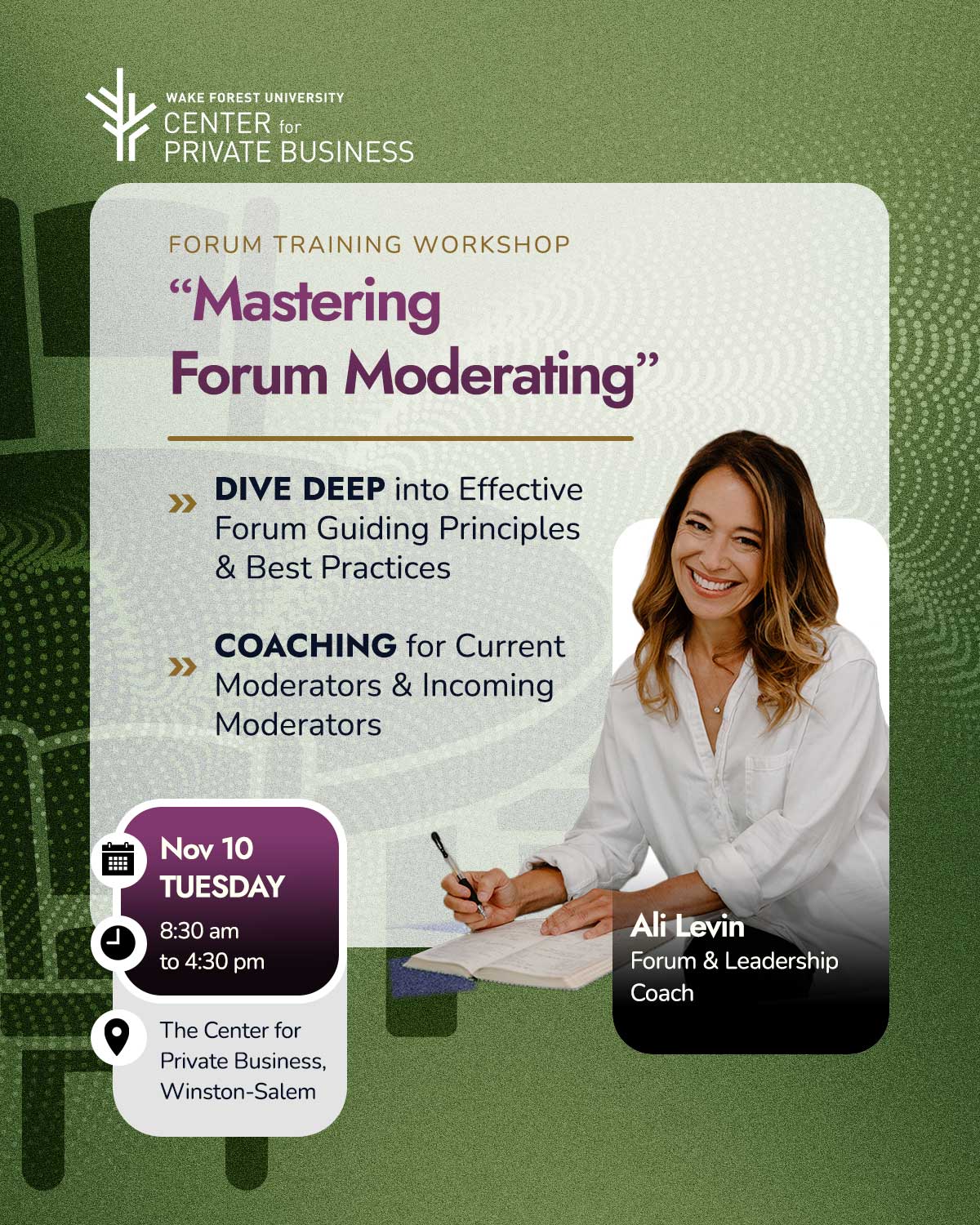
November 10 – Forum Training “Mastering Forum Moderating” with Ali Levin
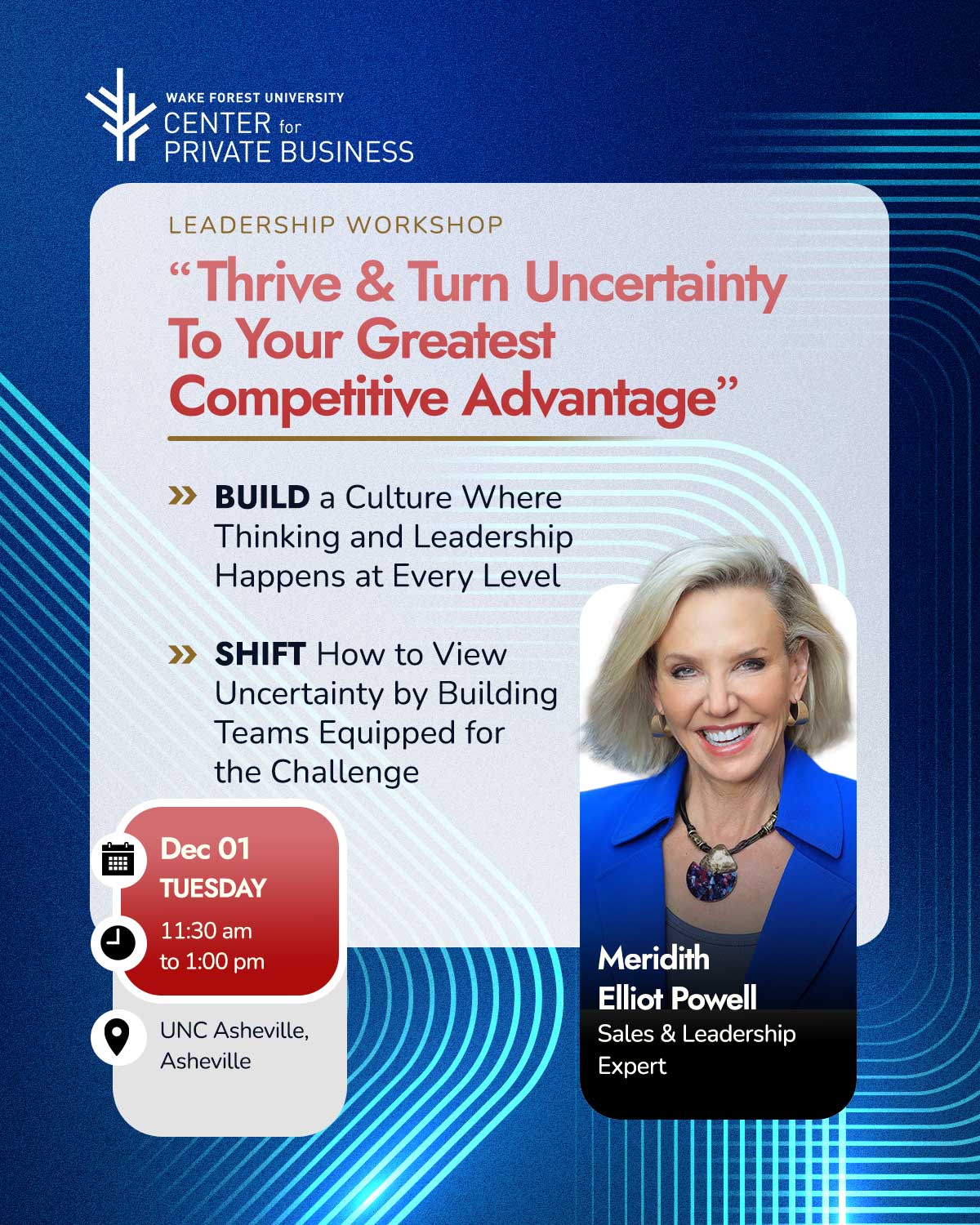
December 1 – Workshop “Thrive & Turn Uncertainty To Your Greatest Competitive Advantage” with Meridith Elliott Powell
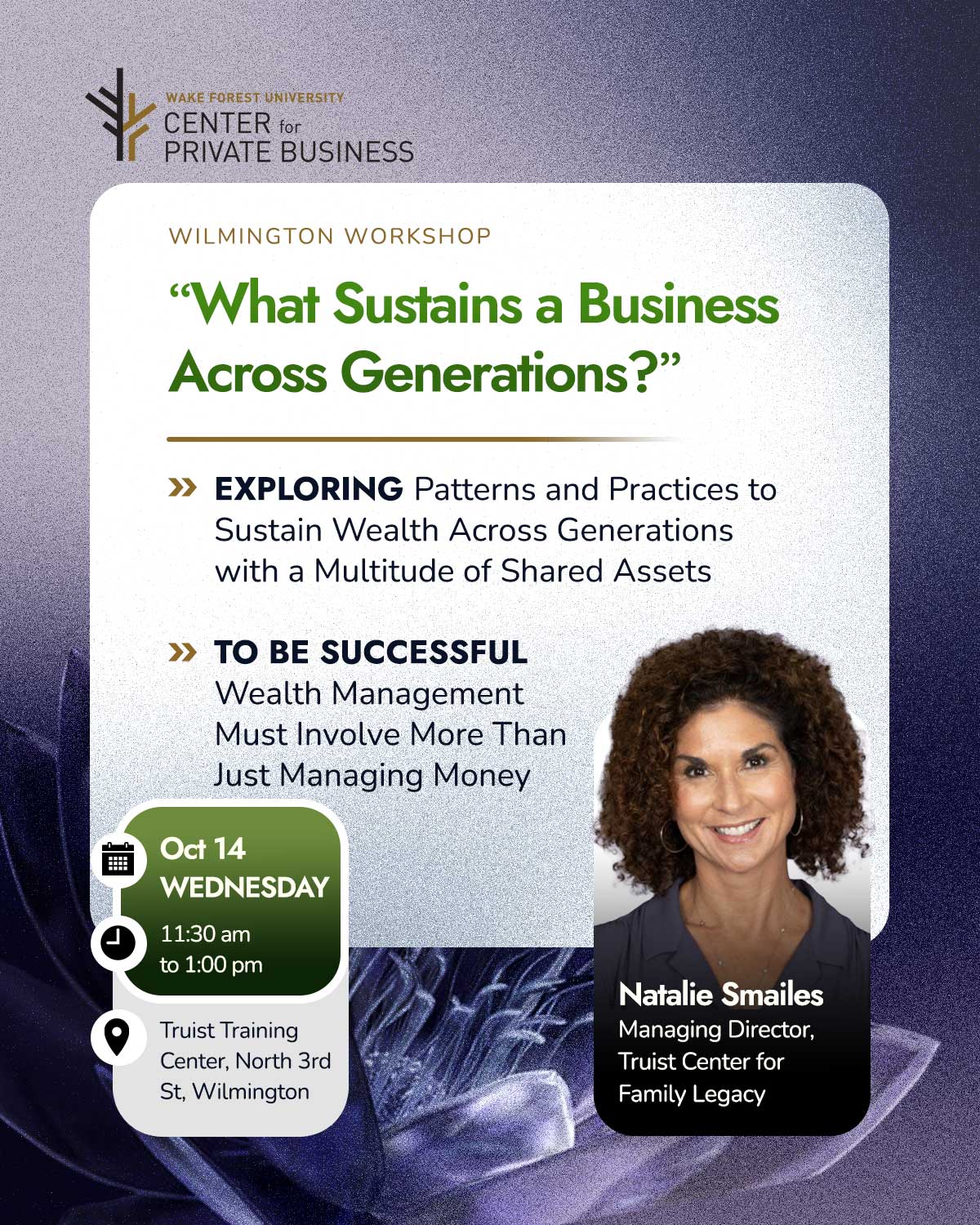
Sustaining a business across generations requires a clear shared mission, structured family governance, and a formal succession plan. Join us for lunch and a presentation by Natalie Smailes, Managing Director of Truist’s Center for Family Legacy. Drawing on the Center for Family Legacy’s work with families and insights from 16 years of research, the conversation will focus on family governance: how families make decisions, communicate, address conflict, develop leadership, and prepare rising generations for the future.
Natalie will explore the patterns and practices that help families sustain wealth, values, and legacy across generations. The discussion will be relevant to private businesses as well as families building wealth through business ownership.
Network and Connect with Center Business Leaders Across Raleigh & NC
Tour the Alfred Williams Showroom to See How Modern Companies are Redesigning Workplace & Corporate Interiors
Dive deep into effective Forum guiding principles and best practices to support current moderators and incoming moderators. Forum attendees will leave the training with a thorough understanding on how to best lead Forum meetings and retreats. This workshop is led by Ali Levin, YPO-Certified Forum Facilitator, Lela Ray, Associate Executive Director of the Center for Private Business, and Drew Hancock, Advisory Board Member of the Center for Private Business.
Who is eligible? Current Forum Moderators and Assistant Moderators. All Forum members are eligible & encouraged to join! We recommend at least one member of each Forum group attends moderator training.
ESOPs are the most widely used form of employee ownership in the United States. They provide employees an ownership stake in the business where they work while offering significant tax benefits to the sponsoring company. On Thursday, November 12 four Triangle-based North Carolina companies that operate under the ESOP model will host a panel discussion on this topic. Our longest operating panelist, Scott Insurance, was founded in 1864 and has been employee-owned for 52 years, since 1975. Over 450+ employees own the company with no single individual owning more than 3% of the shares. Another panelist converted their company to the ESOP model within the last year.
Hear from Scott Insurance, Precision Walls, Bobbit Construction and Baker Roofing Company on how the ESOP model provides rich retirement benefits, enables long-term thinking for a companies sustainable growth and skips many of the financial pressures associated with selling to private equity. This discussion is open to all North Carolina and Raleigh companies in succession plan discussions that are curious about the realities, pros and cons of all choices for a business exit.
Exceptional leaders start by looking inward and making big changes, one small step at a time. In his three decades of military leadership, Jody Fletcher discovered two fundamental truths: If you don’t show up as a good human, you’ll never be a great leader. But being a good human doesn’t automatically make you someone worth following. These qualities must be learned, and the first lesson starts with taking a hard look at the person staring back at you in the mirror.
Well-meaning organizations often promote people into positions of leadership without offering much-if any-proper training. In Good Humans Make Great Leaders, Fletcher offers a simple and sturdy bridge between self-awareness and practical leadership skills to teach new and aspiring managers to lead with trust, respect, and empathy. Our author talk on November 17 will cover how to clearly define and cultivate your core values, define the leadership traits that you want to embody the most, and how to lead with influence, not control.
Brigadier General, Mark Towne, knows trust is a fundamental skill in successful leadership. With over three decades of experience leading from the front-lines to the boardroom, his groundbreaking approach teaches executives how to build trust first.
This author talk, moderated by Nick Whitney, helps managers become effective leaders in trust-building and problem-solving. Learn how to develop leaders on all levels of an organization and better survey and understand the environment your team. Find ways to approach your board before making potentially upsetting changes and strategic approaches so your vision as a leader remains trusted and valued.
Most organizations reach by trying to manage uncertainty — tighter controls, more project management, top-down communication. But uncertainty cannot be managed. Change is not a project – it’s a permanent condition.
The most successful organizations haven’t eliminated uncertainty. They’ve learned how to thrive in it. They don’t rely on one leader to have all the answers. They build teams that think critically, surface opportunities early, and take ownership. Instead of tightening control, they distribute it. Instead of managing change, they leverage it.
Meridith Elliott Powell invites Asheville business owners and leaders for a powerful, research-backed keynote program designed to turn disruption into competitive advantage.
Most business owners have people who work for them. But not enough have people who help them step back, think clearly, and make better decisions. Join Wilmington EOS Implementer, Joe Kozubowski, as he moderates a candid conversation with ICF-credentialed executive coaches about three forms of support private business owners commonly turn to:
+ An operating system that helps the organization build clarity, discipline, and accountability
+ A confidential peer forum that gives the owner perspective from other business leaders
+ An executive coach who helps the individual leader examine challenges, assumptions, and choices
The panel will explore what each form of support does well, where its limits are, when it becomes useful, and how the three can complement one another. Attendees will leave with a clearer understanding of where their current support system is strong, where it may be thin, and what kind of help would be most useful now.